Invoicing made easy
Create proposals and send one-time-only or recurring custom invoices to your clients when it’s time to bill.
Run your business. Rule your finances.
Find your flow with simple financial tools and real-time insights. Manage everything in one place — maximize tax deductions, send invoices, and get paid fast.
If you’ve launched a business, call now to try ZenBusiness Money Pro for 1 month free.
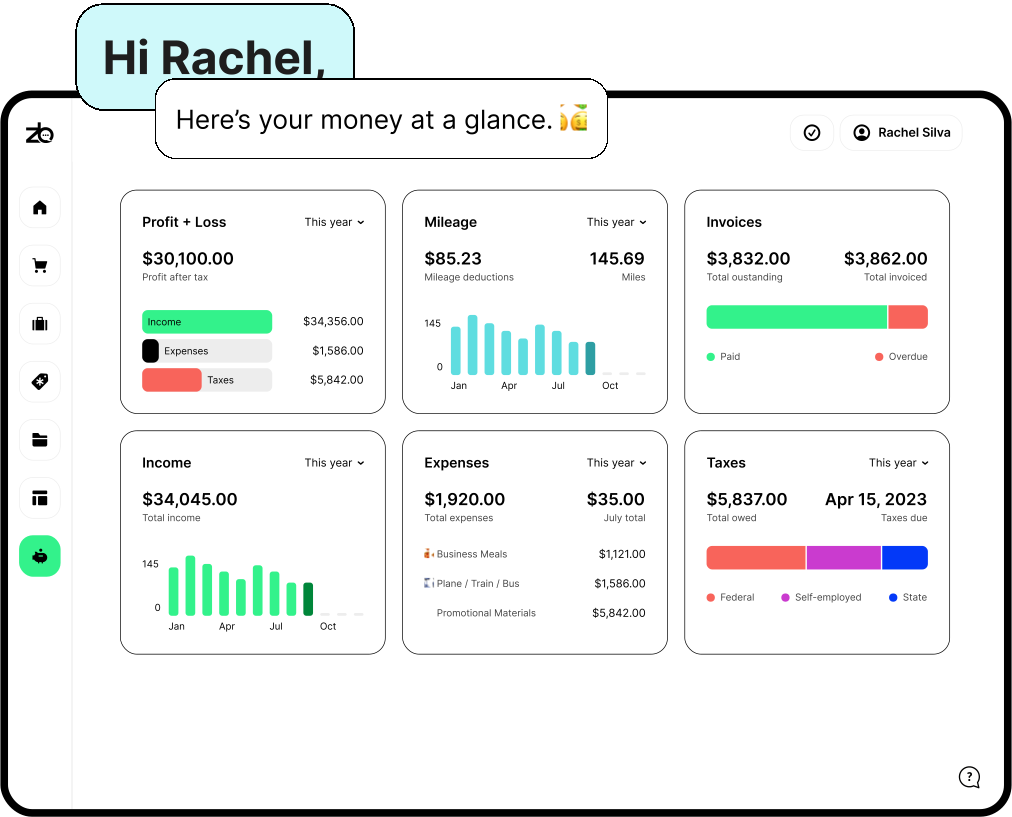
Ditch the scattered solutions for all the tools you need in one place.
Create proposals and send one-time-only or recurring custom invoices to your clients when it’s time to bill.
Our easy-to-use client management tools help keep you organized.

Give clients an easy way to pay invoices by accepting online payments through credit/debit cards and ACH (bank transfer).

You make the money. We’ll help you keep tabs on it with the automatic income and expense tracker.

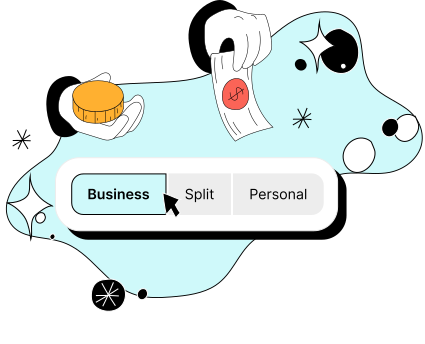
With a few simple clicks, you can track, categorize, and manage all your expenses and small business tax deductions.
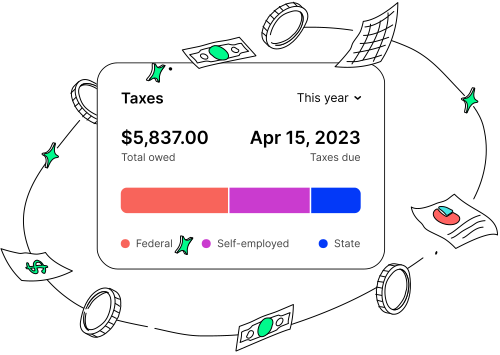
Taxes don’t have to be a nightmare. When all your finances are in one place, you can prep your taxes with confidence.
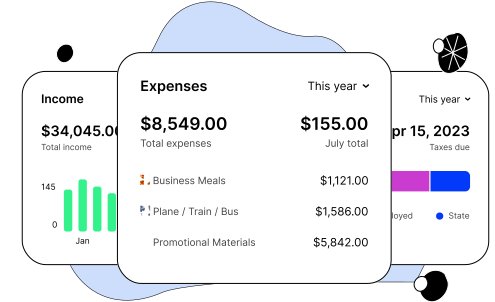
Gain valuable insights to keep tabs on your money flowing in and out with simple charts, so you focus your attention in the areas that matter most.
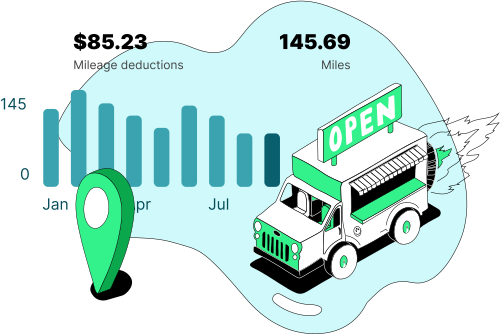
Use the mileage tracker to easily maximize your year-end tax deductions and bill clients for your travel expenses.
Create proposals and send one-time-only or recurring custom invoices to your clients when it’s time to bill.

Still need to form your business?
Get walked through starting your LLC or Corp. Then you can sign up for the one-month free trial of ZenBusiness Money Pro.

You guys make it easy
I have used ZenBusiness Money Pro several times and you guys make it easy to send invoices and other things like that for the customer. You guys give…

Game changer
The integration with bank accounts has made the expense/income tracking easier, and the invoicing feature is awesome to keep things organized. I love…
It's all in one place!
I go to you guys to keep track of everything that I sell. ZenBusiness Money Pro definitely helps keep track of everything, and it’s all in one…
All you need is an active bank account, your online banking credentials (username and password), and a mobile device that receives texts.
We have integrated with Plaid. Your data is secure and will never be compromised. You can also check out Plaid’s website if you want to know more about their data security: https://plaid.com/safety/
Yes, you can link an active credit card, as long as the banking institution is supported by Plaid.
Yes, you can send a quote to a client by creating an invoice, and then when you are ready to send it, click “Send as Quote.”
Be sure to check out our Money Pro Guided Tour!

ZenBusiness Money Pro helps you track and manage all your business finances in one place, so you can serve clients better, stay organized, and save time and money on taxes.
Call now for your 1 month free trial.