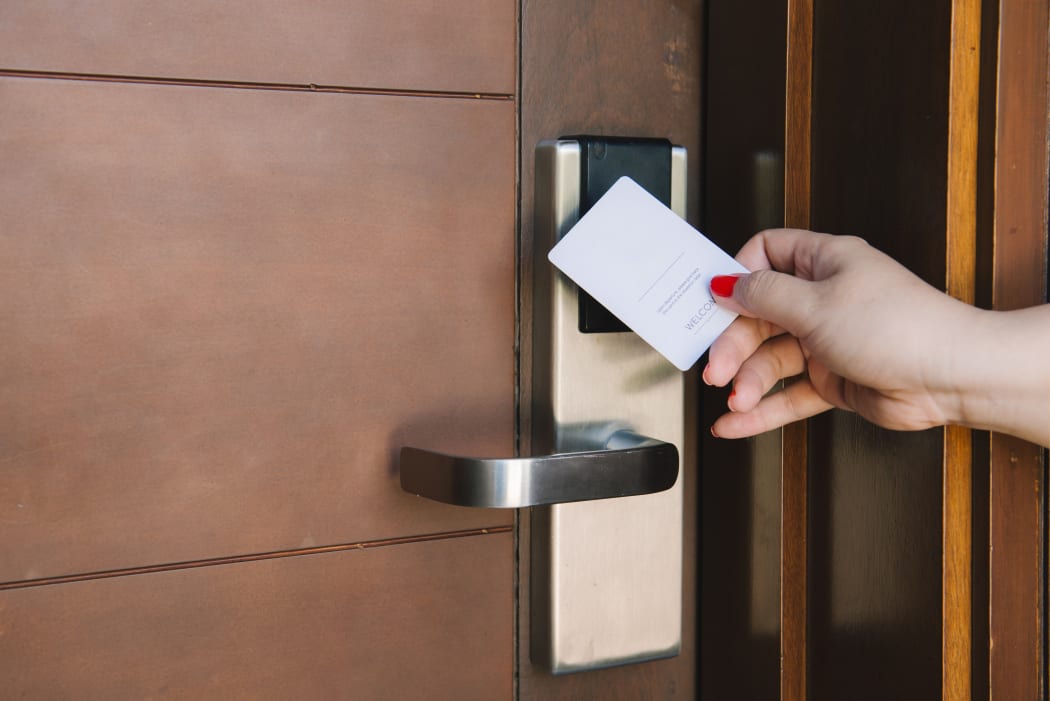
Planning to travel soon? If so, you should know that criminals target unsuspecting hotel guests. The best way to avoid becoming a target yourself is by taking precautions and being watchful. The following tips can help.
As many small business owners will travel and attend conventions this time of year, be advised that one should be security-conscious even if staying in a fine hotel.
RELATED: Safety Tips for SOHO Travelers
While overseeing security programs for many years for a Defense Department command in Philadelphia, I often performed travel security seminars for the entire command. I also offered personalized travel security briefings for individuals who were traveling for the government or on vacation.
I advised our military and civilian employees that, although most hotels are safe, one should be aware that criminals operate in and around hotels. They look for potential victims since many vacationers and business travelers tend to let their guard down.
The U.S. State Department’s Overseas Security Advisory Council (OSAC) offers American travelers some good hotel security tips. While the tips are designed for overseas travel, many can also be applied for hotel stays in the continental United States. Some of them are listed below:
When checking into your hotel, be aware of persons in the lobby who may have an unusual interest in your arrival.
-
If carrying your luggage, keep it within view or reach. One recommendation is to position luggage against your leg during registration, but place a briefcase or a purse on the desk or counter in front of you.
-
Ground floor rooms which open to a pool area or beach with sliding glass doors and window access are considered vulnerable. Depending on the situation, area, and security coverage, exercise a higher level of security if assigned a first floor room.
-
It is suggested that travelers request rooms that are away from the elevator landing and stairwells. This is to avoid being caught by surprise by persons exiting the elevator with you or hiding in the stairwell.
-
Always accept bellman assistance upon check-in. Allow the bellman to open the room, turn lights on, and check the room to ensure that it is vacant and ready for your stay. Before dismissing the bellman, always inspect the door lock, locks on sliding glass doors, optical viewer, privacy latch or chain, guest room safes, dead bolt lock on interconnecting suite door, and telephone. If a discrepancy is found, request a room change.
-
Ask where the nearest fire stairwell is located. Make a mental note which direction you must turn and approximately how many steps there are to the closest fire stairwell. In the event of a fire, there is frequently dense smoke and no lighting.
-
Observe where the nearest house telephone is located in case of an emergency. Determine if the telephone is configured in such a manner that anyone can dial a guest room directly, or whether the phone is connected to the switchboard. Most security-conscious hotels require a caller to identify whom they are attempting to telephone rather than providing a room number. (I would add that travelers always carry a cell phone with them as well).
-
Note how hotel staff are uniformed and identified. Many “pretext” crimes occur by persons misrepresenting themselves as hotel employees on house telephones to gain access to guest rooms. Avoid permitting a person into the room unless you have confirmed that the person is authorized to enter. This can be verified by using the optical viewer and by calling the front desk.
-
Be aware of your surroundings. Look up and down the street before exiting a building.
-
Avoid jogging or walking in cities you are not familiar with. If you jog, be aware of the traffic patterns when crossing public streets. (Joggers have been seriously injured by failing to understand local traffic conditions.)
-
Valuables should normally be left at home. The rule of thumb is, if you neither want nor can afford to lose them, don’t take them.
-
Keep your luggage locked whenever you are out of the room.
-
At night, lock your passport and your other valuables in your luggage.
-
While in the room, keep the door closed and engage the dead bolt and privacy latch or chain. A limited number of hotel emergency keys can override the dead bolt locks. To ensure privacy, use the latch or chain.
-
Hoteliers provide guest room “safes.” However, these containers are not as durable as bank safes and can be breached. Furthermore, the Housekeepers Liability Laws provide that if guest property is not in the “care, custody, and control of the hotel,” the hotel is not liable. Guests should always place money or valuables in the safe deposit box at the front desk of the hotel.
-
When leaving the guest room, ensure that the door properly closes and is secured. Make a mental note of how your property was left; avoid leaving valuables in plain view or in an unorganized manner.
-
Prior to traveling, it is recommended that you copy all credit cards, passport, air tickets and other documents to facilitate reporting loss and replacing them. While traveling abroad, secure these documents in the room safe deposit box and carry copies of your passport and visa.
-
Request housekeeping make up your room while you are at breakfast, rather than leave a “Please Service This Room” sign on the door knob. This sign is a signal that the room is unoccupied.
-
If you are required to use parking stickers in your auto, be sure that it does not indicate your name or room number.
-
Look for emergency procedures printed in all hotel rooms. Try to receive a room that is not directly above the front lobby if possible and a room not above floor seven, which would make it harder to get down the stairs in a fire emergency.
Law enforcement and security professionals say that most crimes are preventable. To avoid becoming a victim while staying at a hotel, one should follow the above hotel security tips.